



Study design

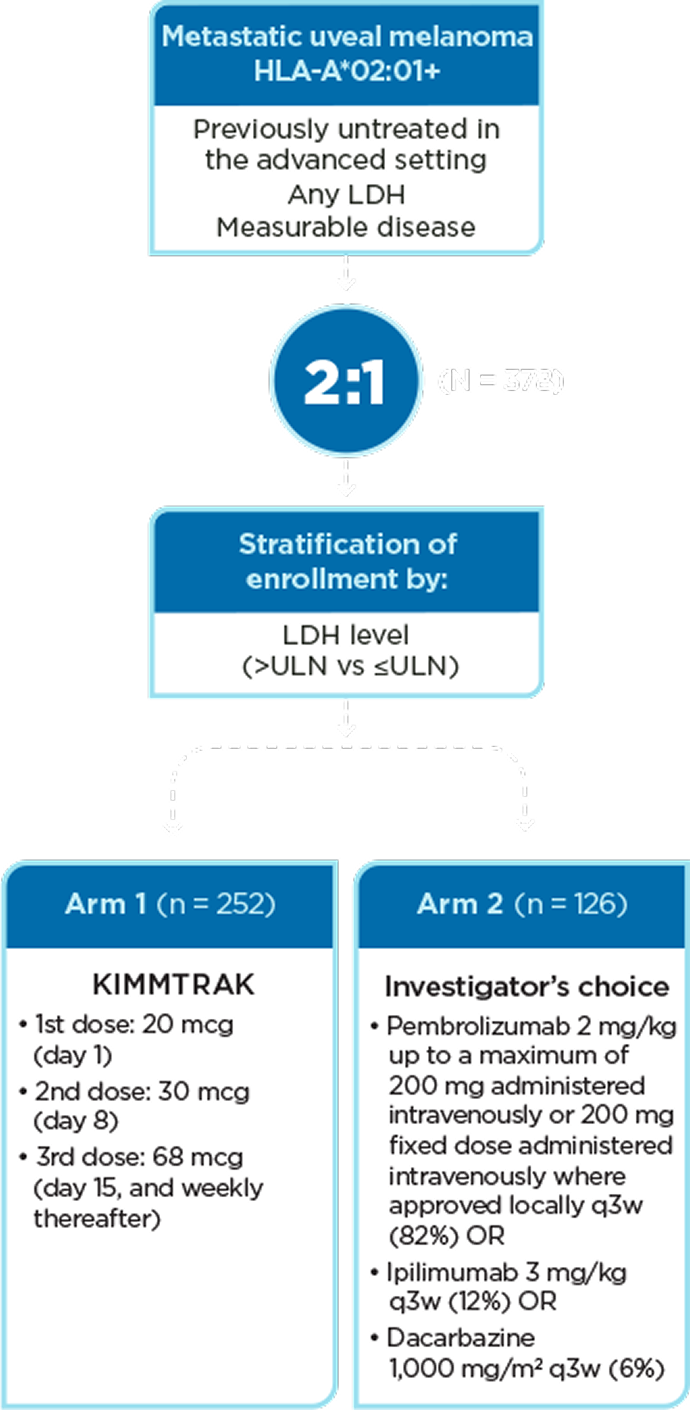
The largest phase 3 trial in mUM compared KIMMTRAK with checkpoint inhibitors or chemotherapy in first-line2,3
An international, multicenter, phase 3, pivotal, 2:1 randomized, controlled trial of 378 HLA-A*02:01-positive adult patients with mUM compared KIMMTRAK with investigator’s choice2-4
- Investigator's choice included checkpoint inhibitors (pembrolizumab [82%], ipilimumab [12%]) or chemotherapy (dacarbazine [6%])3
Select enrollment criteria4
Inclusion
- Histologically or cytologically confirmed mUM
- No prior systemic therapy, including chemotherapy, immunotherapy, or targeted therapy, in the metastatic or advanced setting
- No prior regional, liver-directed therapy, including chemotherapy, radiotherapy, or embolization
- Prior surgical resection of oligometastatic disease was allowed
- Prior neoadjuvant or adjuvant therapy was allowed, provided it was administered in the curative setting in patients with localized disease. Patients could not be re-treated with an investigator’s choice† therapy that was administered as adjuvant or neoadjuvant treatment. Additionally, patients who had received nivolumab as prior adjuvant/neoadjuvant treatment were not to receive pembrolizumab as investigator’s choice therapy
- HLA-A*02:01 positive by central assay
- Eastern Cooperative Oncology Group Performance Status (ECOG PS) of 0 or 1 at screening
HLA-A, human leukocyte antigen-A; LDH, lactate dehydrogenase; ULN, upper limit of normal; q3w, once every 3 weeks.
- *Based on Komodo US medical claims from February 2022 through December 2025 and calibrated with actual vials sold.1
- †Investigator's choice included checkpoint inhibitors (pembrolizumab and ipilimumab) and chemotherapy (dacarbazine).4
Exclusion
- History of severe hypersensitivity reactions (eg, anaphylaxis) to other biologic drugs or monoclonal antibodies
- Clinically significant cardiac disease or impaired cardiac function
- Presence of symptomatic or untreated central nervous system metastases
- Active infection requiring systemic antibiotic therapy. Patients requiring systemic antibiotics for infection must have completed therapy at least 1 week prior to the first dose of study drug
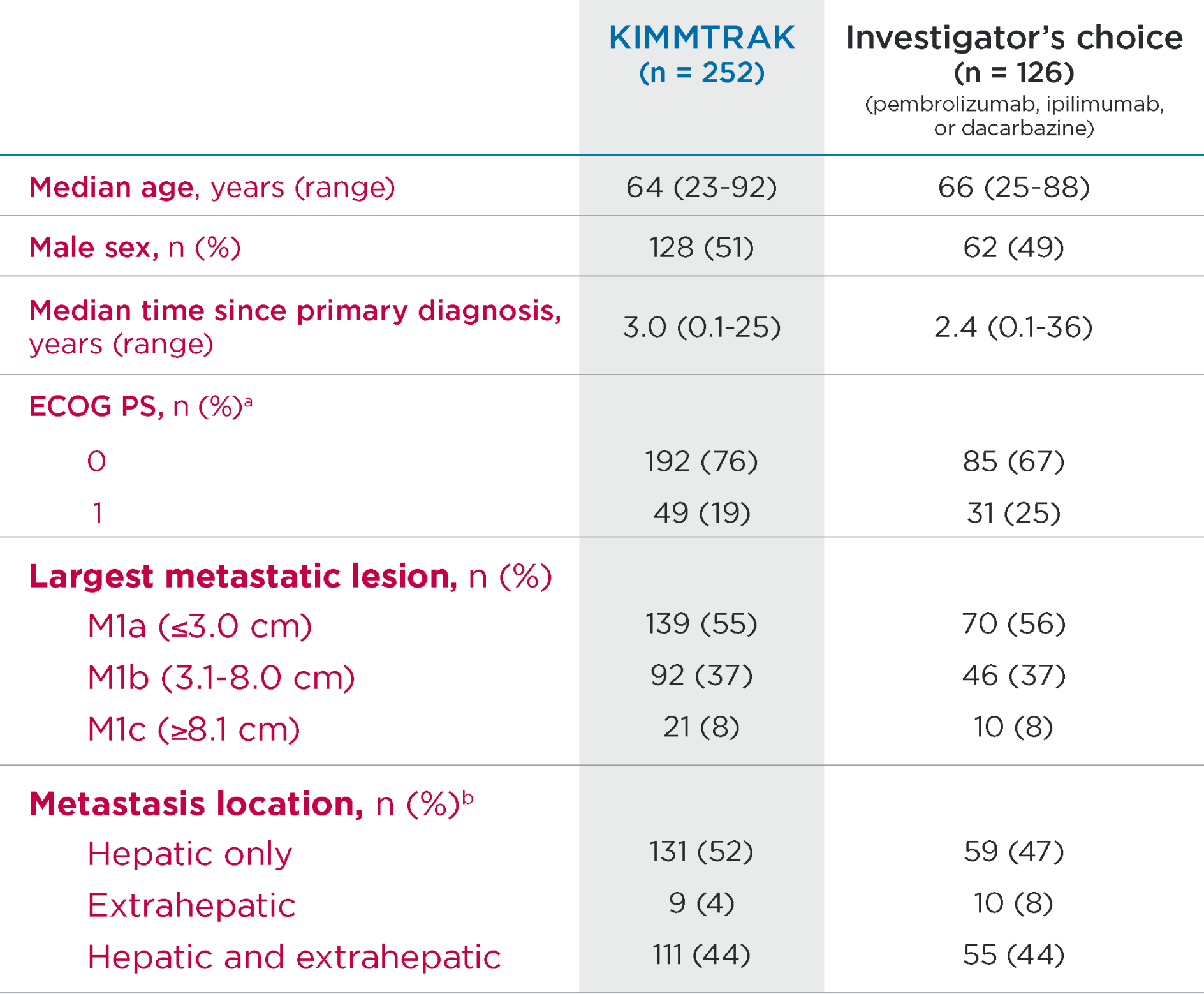
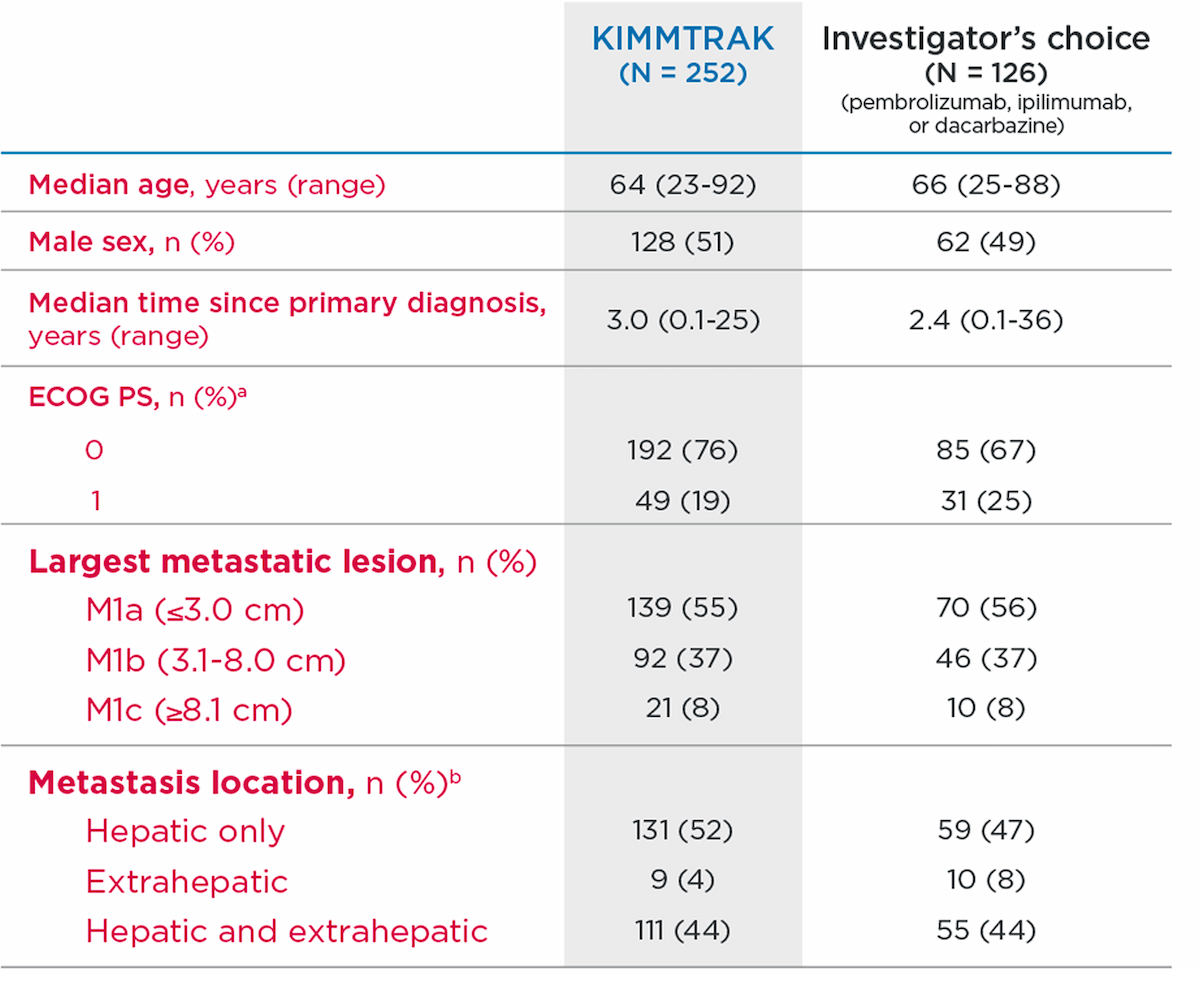
- aOne patient had an ECOG PS of 2 (investigator’s choice); 20 patients had a missing ECOG status (11 KIMMTRAK, 9 investigator’s choice).
- bThree patients had missing metastasis location (1 KIMMTRAK, 2 investigator’s choice).
Indication
Important Safety Information Including Boxed Warning
KIMMTRAK is indicated for the treatment of HLA-A*02:01-positive adult patients with unresectable or metastatic uveal melanoma.
WARNING: CYTOKINE RELEASE SYNDROME
Cytokine Release Syndrome (CRS), which may be serious or life-threatening, occurred in patients receiving KIMMTRAK. Monitor for at least 16 hours following first three infusions and then as clinically indicated.
Indication and Important Safety Information Including Boxed Warning
Indication
KIMMTRAK is a bispecific gp100 peptide-HLA-directed CD3 T cell engager indicated for the treatment of HLA-A*02:01-positive adult patients with unresectable or metastatic uveal melanoma.
Important Safety Information Including Boxed Warning
WARNING: CYTOKINE RELEASE SYNDROME
Cytokine Release Syndrome (CRS), which may be serious or life-threatening, occurred in patients receiving KIMMTRAK. Monitor for at least 16 hours following first three infusions and then as clinically indicated. Manifestations of CRS may include fever, hypotension, hypoxia, chills, nausea, vomiting, rash, elevated transaminases, fatigue, and headache. CRS occurred in 89% of patients who received KIMMTRAK with 0.8% being grade 3 or 4. Ensure immediate access to medications and resuscitative equipment to manage CRS. Ensure patients are euvolemic prior to initiating the infusions. Closely monitor patients for signs or symptoms of CRS following infusions of KIMMTRAK. Monitor fluid status, vital signs, and oxygenation level and provide appropriate therapy. Withhold or discontinue KIMMTRAK depending on persistence and severity of CRS.
Skin ReactionsSkin reactions, including rash, pruritus, and cutaneous edema occurred in 91% of patients treated with KIMMTRAK. Monitor patients for skin reactions. If skin reactions occur, treat with antihistamine and topical or systemic steroids based on persistence and severity of symptoms. Withhold or permanently discontinue KIMMTRAK depending on the severity of skin reactions.
Elevated Liver Enzymes Elevations in liver enzymes occurred in 65% of patients treated with KIMMTRAK. Monitor alanine aminotransferase (ALT), aspartate aminotransferase (AST), and total blood bilirubin prior to the start of and during treatment with KIMMTRAK. Withhold KIMMTRAK according to severity.
Embryo-Fetal ToxicityKIMMTRAK may cause fetal harm. Advise pregnant patients of potential risk to the fetus and patients of reproductive potential to use effective contraception during treatment with KIMMTRAK and 1 week after the last dose.
The most common adverse reactions (≥30%) in patients who received KIMMTRAK were cytokine release syndrome, rash, pyrexia, pruritus, fatigue, nausea, chills, abdominal pain, edema, hypotension, dry skin, headache, and vomiting. The most common (≥50%) laboratory abnormalities were decreased lymphocyte count, increased creatinine, increased glucose, increased AST, increased ALT, decreased hemoglobin, and decreased phosphate.
Please see full Prescribing Information, including BOXED WARNING for CRS.