




This site is intended for US healthcare professionals

Elizabeth, 70 years

HLA STATUS: HLA-A*02:01+

Elizabeth is a retired teacher who enjoys tutoring high school–level math at her local library. When routine imaging revealed her disease had spread, Elizabeth wanted to know the 1L treatment option that best fits her primary treatment goal of more time with her students.

This is a fictitious patient profile and is not representative of all patients. The profile is intended to be used for education and illustrative purposes only.

Image Elizabeth

In 90% of cases, the
liver is the primary location
of metastasis.3

In the phase 3 trial,
52% (n = 131) of KIMMTRAK
patients had hepatic-only
mUM vs 47% (n = 59) with IC.4,†

In addition to the liver,
many patients experience
metasases in the lung, bone,
and other organs.5

In the phase 3 trial,
44% (n = 111) of KIMMTRAK
patients had hepatic and
extrahepatic mUM vs
44% (n = 55) with IC4,†

Image Dave

Dave, 61 years

HLA STATUS: HLA-A*02:01+

Dave is married with 3 children, and his first grandchild is on the way. Since his primary diagnosis in 2024, Dave has learned that his disease has spread. Dave wants as much time as possible with his family, and to select the 1L treatment that is best for him.

This is a fictitious patient profile and is not representative of all patients. The profile is intended to be used for education and illustrative purposes only.

UNPRECEDENTED overall survival (OS) benefit with 1L KIMMTRAK4-9

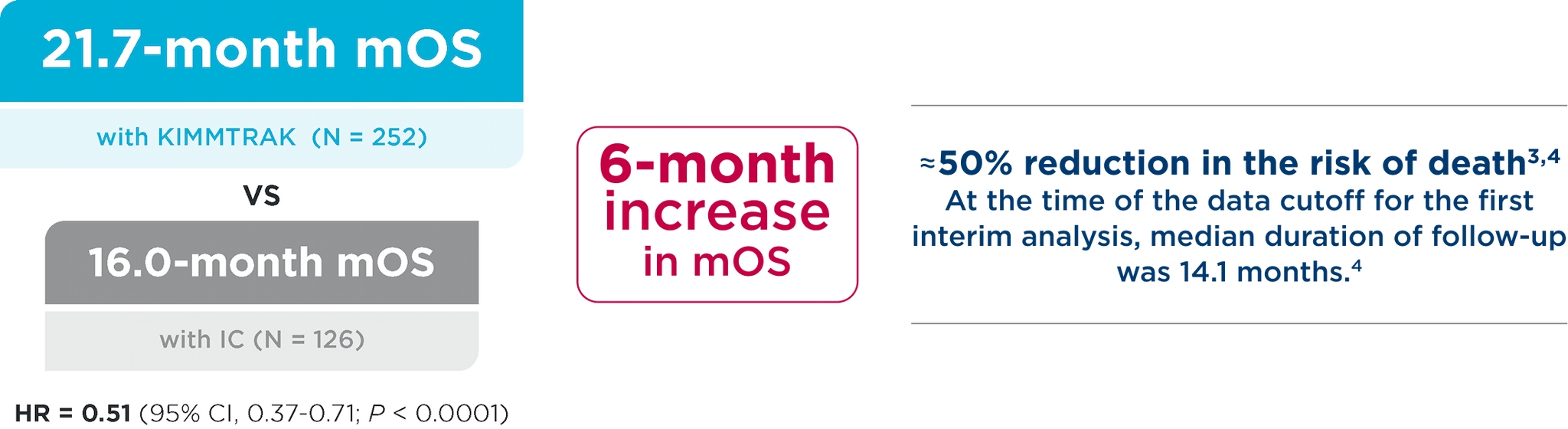
Largest phase 3 trial in mUM evaluated first-line treatment with KIMMTRAK vs investigator's choice.4,10,† 1L KIMMTRAK significantly extended median overall survival by 6 months vs investigator's choice4,10,†

21.7 months with KIMMTRAK (N = 252) vs 16.0 months with investigator's choice, (N = 126)4,10

  • HR = 0.51 (95% CI, 0.37-0.71; P < 0.0001)4,10; median duration of follow-up: 14.1 months.4

HISTORIC 5-YEAR follow-up analysis of OS2
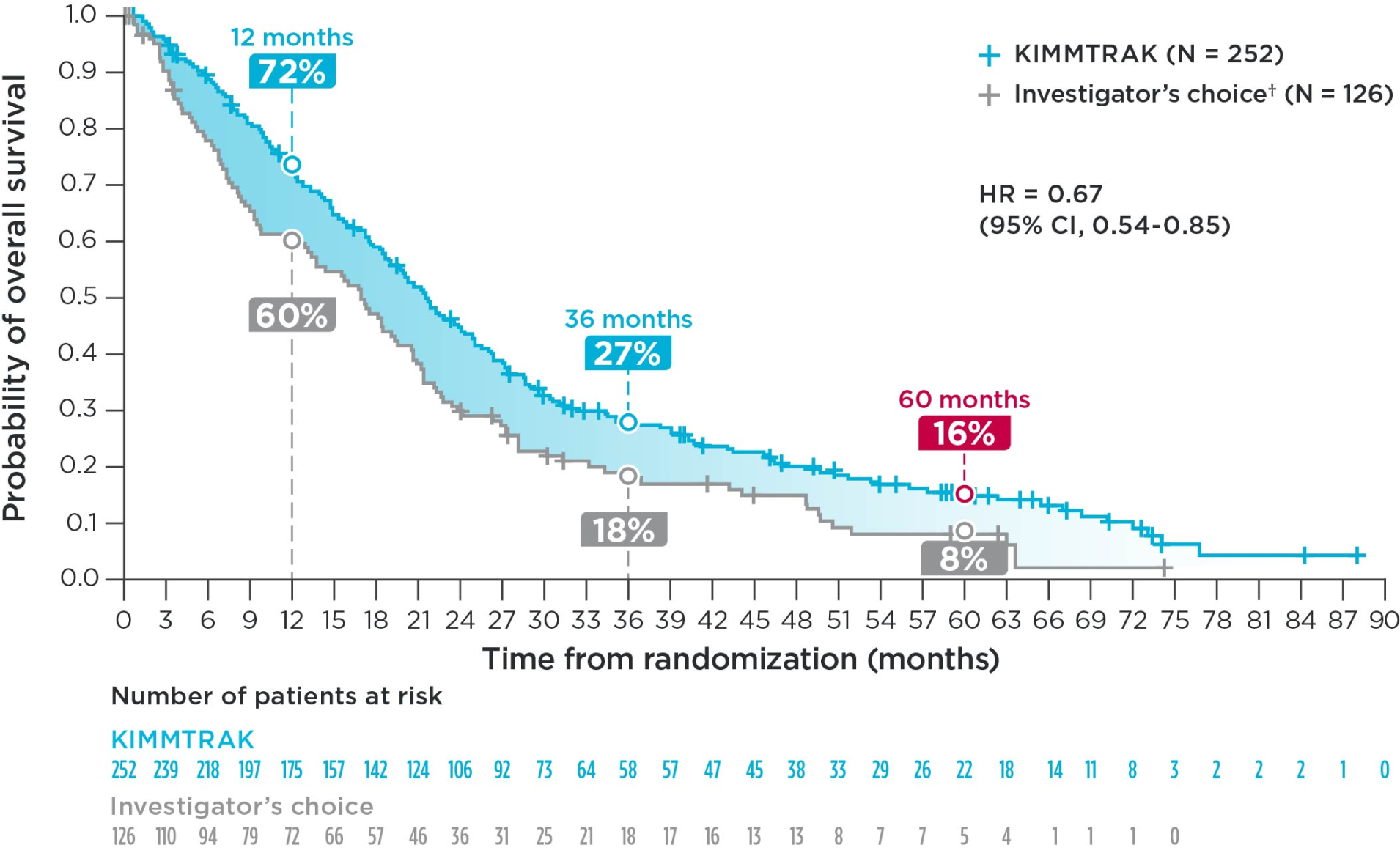
KIMMTRAK doubled the likelihood of being alive at 5-years: (16%) vs (8%) with investigator's choice2,†
Pinch to zoom

Patients assigned to KIMMTRAK showed a long-term survival advantage at 5 years (KIMMTRAK median overall survival 21.6 months [19.0-24.3] vs 16.9 months [12.9-19.5] with investigator’s choice, 95% CI).2

As of July 2, 2025, all study participants had the opportunity for at least 60 months of follow-up, with a median follow-up of 62.4 months.2

Of the patients surviving at least 5 years2,11:

  • 44% (11 of 25) in the KIMMTRAK arm reported ONLY receiving KIMMTRAK
  • 86% (6 of 7) in the control group received subsequent KIMMTRAK

The planned exploratory 5-YEAR overall survival analysis occurred after the protocol-specified final analysis and was not tested for statistical significance. No statistical conclusions can be drawn.

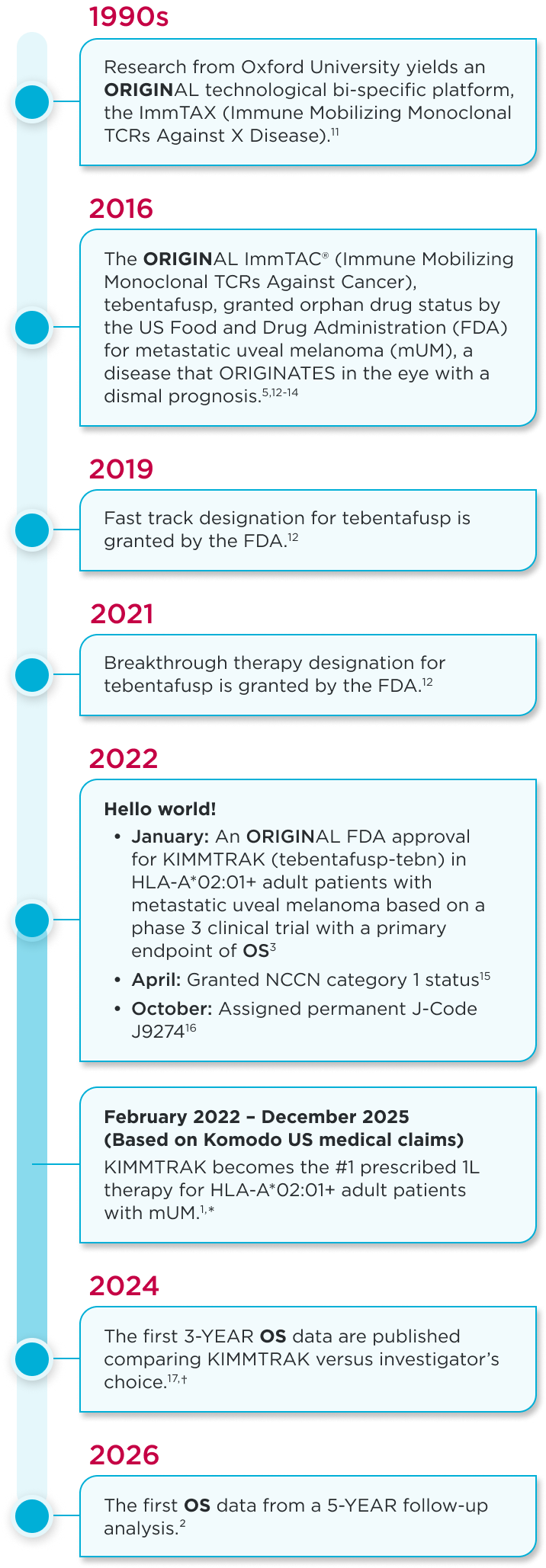
THE KIMMTRAK ORIGIN STORY
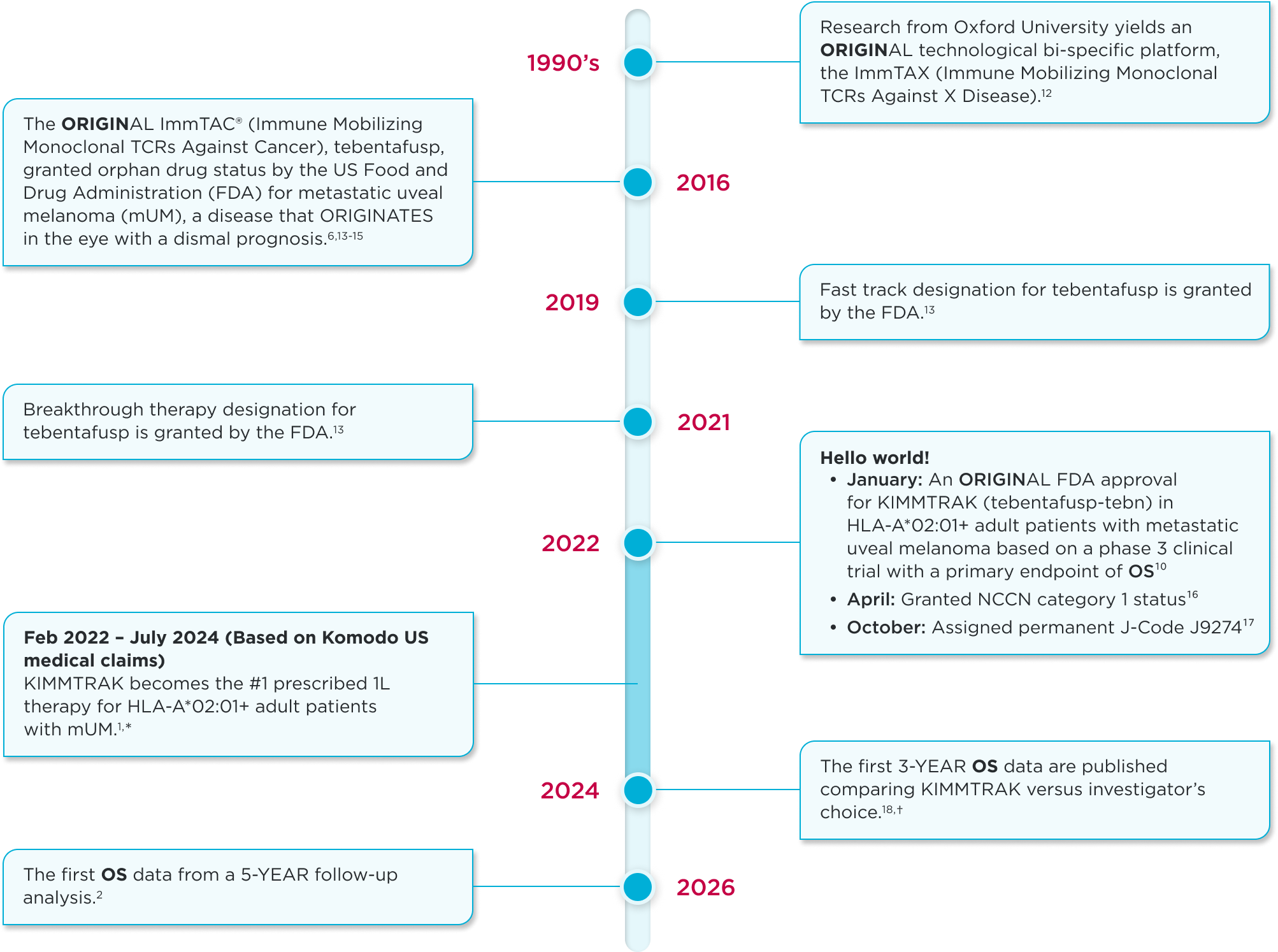
TimelineTimeline
Pinch to zoom

CI, confidence interval; HLA, human leukocyte antigen-A; HR, hazard ratio; IC, investigator's choice.

Mechanism of action

A first-in-class T cell engager directed against mUM10

  • KIMMTRAK is an ImmTAC† molecule that targets gp100, an intracellular antigen presented on the cells of HLA-A*02:01-positive patients with mUM4,10,19
  • KIMMTRAK binds to the gp100/HLA-A*02:01 complex to form an immune synapse, which activates cytotoxic T cells that target and kill gp100-expressing UM tumor cells10,20,21
    • Normal melanocytes could also be targeted21
  • KIMMTRAK has 1 million-fold greater affinity for gp100 presented by HLA-A*02:01 than natural T cell receptors20,22
  • T cell engager directed against mUM based on in vitro and in vivo studies10,21,23
  • *Based on Komodo US medical claims from February 2022 through July 2024 and calibrated with actual vials sold.1
  • Investigator’s choice included checkpoint inhibitors (pembrolizumab and ipilimumab) or chemotherapy (dacarbazine).2,4,10
  • ImmTAC (Immune Mobilizing Monoclonal TCRs Against Cancer) molecules are bispecifics comprised of a T cell receptor targeting domain and an effector function pioneered by Immunocore.10

CI, confidence interval; HLA, human leukocyte antigen-A; HR, hazard ratio; IC, investigator's choice;
mUM, metastatic uveal melanoma; UM, uveal melanoma.

Consider a blood test for your patients with mUM to determine their HLA status and if KIMMTRAK is right for them.10 Click here to learn more.

Indication
 
Important Safety Information Including Boxed Warning

KIMMTRAK is indicated for the treatment of HLA-A*02:01-positive adult patients with unresectable or metastatic uveal melanoma.

WARNING: CYTOKINE RELEASE SYNDROME
Cytokine Release Syndrome (CRS), which may be serious or life-threatening, occurred in patients receiving KIMMTRAK. Monitor for at least 16 hours following first three infusions and then as clinically indicated.

Indication and Important Safety Information Including Boxed Warning

Indication

KIMMTRAK is a bispecific gp100 peptide-HLA-directed CD3 T cell engager indicated for the treatment of HLA-A*02:01-positive adult patients with unresectable or metastatic uveal melanoma.

Important Safety Information Including Boxed Warning

WARNING: CYTOKINE RELEASE SYNDROME
Cytokine Release Syndrome (CRS), which may be serious or life-threatening, occurred in patients receiving KIMMTRAK. Monitor for at least 16 hours following first three infusions and then as clinically indicated.
Manifestations of CRS may include fever, hypotension, hypoxia, chills, nausea, vomiting, rash, elevated transaminases, fatigue, and headache. CRS occurred in 89% of patients who received KIMMTRAK with 0.8% being grade 3 or 4. Ensure immediate access to medications and resuscitative equipment to manage CRS. Ensure patients are euvolemic prior to initiating the infusions. Closely monitor patients for signs or symptoms of CRS following infusions of KIMMTRAK. Monitor fluid status, vital signs, and oxygenation level and provide appropriate therapy. Withhold or discontinue KIMMTRAK depending on persistence and severity of CRS.

Skin ReactionsSkin reactions, including rash, pruritus, and cutaneous edema occurred in 91% of patients treated with KIMMTRAK. Monitor patients for skin reactions. If skin reactions occur, treat with antihistamine and topical or systemic steroids based on persistence and severity of symptoms. Withhold or permanently discontinue KIMMTRAK depending on the severity of skin reactions.

Elevated Liver Enzymes Elevations in liver enzymes occurred in 65% of patients treated with KIMMTRAK. Monitor alanine aminotransferase (ALT), aspartate aminotransferase (AST), and total blood bilirubin prior to the start of and during treatment with KIMMTRAK. Withhold KIMMTRAK according to severity.

Embryo-Fetal ToxicityKIMMTRAK may cause fetal harm. Advise pregnant patients of potential risk to the fetus and patients of reproductive potential to use effective contraception during treatment with KIMMTRAK and 1 week after the last dose.

The most common adverse reactions (≥30%) in patients who received KIMMTRAK were cytokine release syndrome, rash, pyrexia, pruritus, fatigue, nausea, chills, abdominal pain, edema, hypotension, dry skin, headache, and vomiting. The most common (≥50%) laboratory abnormalities were decreased lymphocyte count, increased creatinine, increased glucose, increased AST, increased ALT, decreased hemoglobin, and decreased phosphate.

Please see full Prescribing Information, including BOXED WARNING for CRS.

References: 1. Data on file. Immunocore. [2024-C019].2. Nathan P. Five-year survival with tebentafusp in previously untreated metastatic uveal melanoma in a phase 3 trial. Presented at: American Association for Cancer Research Annual Meeting; April 19, 2026; San Diego, CA.3. Carvajal RD, Schwartz GK, Tezel T, et al. Metastatic disease from uveal melanoma: treatment options and future prospects. Br J Ophthalmol. 2017;101(1):38-44. doi:10.1136/bjophthalmol-2016-3090344. Nathan P, Hassel JC, Rutkowski P, et al; IMCgp100-202 Investigators. Overall survival benefit with tebentafusp in metastatic uveal melanoma. N Engl J Med. 2021;385(13):1196-1206. doi:10.1056/NEJMoa21034855. Khoja L, Atenafu EG, Suciu S, et al. Meta-analysis in metastatic uveal melanoma to determine progression free and overall survival benchmarks: an International Rare Cancers Initiative (IRCI) ocular melanoma study. Ann Oncol. 2019;30(8):1370-1380. doi:10.1093/annonc/mdz1766. Rantala ES, Hernberg M, Kivelä TT. Overall survival after treatment for metastatic uveal melanoma: a systematic review and meta-analysis. Melanoma Res. 2019;29(6):561-568. doi:10.1097/CMR.00000000000005757. Carvajal RD, Sacco JJ, Jager MJ, et al. Advances in the clinical management of uveal melanoma. Nat Rev Clin Oncol. 2023;20(2):99-115. doi:10.1038/s41571-022-00714-1 8. Augsburger JJ, Corrêa ZM, Shaikh AH. Effectiveness of treatments for metastatic uveal melanoma. Am J Ophthalmol. 2009;148(1):119-127. doi:10.1016/j.ajo.2009.01.0239. Petzold A, Steeb T, Wessely A, et al. Is tebentafusp superior to combined immune checkpoint blockade and other systemic treatments in metastatic uveal melanoma? A comparative efficacy analysis with population adjustment. Cancer Treat Rev. 2023;115:102543. doi:10.1016/j.ctrv.2023.102543 10. Kimmtrak. Prescribing information. Immunocore Ltd; 202411. Data on file. Immunocore. [2026-C002].12. About Us. Immunocore corporate website. Accessed March 3, 2026. https://www.immunocore.com/about-us?utm_source=chatgpt.com13. FDA. Center for Drug Evaluation and Research. Meeting minutes. March 2021. Accessed March 3, 2026. https://www.accessdata.fda.gov/drugsatfda_docs/nda/2022/761228Orig1s000AdminCorres.pdf14. Yang J, Manson DK, Marr BP, Carvajal RD. Treatment of uveal melanoma: where are we now? Ther Adv Med Oncol. 2018;10:1758834018757175. doi:10.1177/175883401875717515. Pandiani C, Béranger GE, Leclerc J, Ballotti R, Bertolotto C. Focus on cutaneous and uveal melanoma specificities. Genes Dev. 2017;31(8):724-743. doi:10.1101/gad.296962.11716. Referenced with permission from the NCCN Clinical Practice Guidelines in Oncology (NCCN Guidelines®) for Melanoma: Uveal V.2.2022. © National Comprehensive Cancer Network, Inc. 2022. All rights reserved. Accessed January 20, 2026. To view the most recent and complete version of the guideline, go online to NCCN.org. NCCN makes no warranties of any kind whatsoever regarding their content, use or application and disclaims any responsibility for their application or use in any way.17. Centers for Medicare & Medicaid Services (CMS) healthcare common procedure coding system (HCPCS) application summaries and coding recommendations. Second Quarter, 2022. Accessed March 3, 2026. https://www.cms.gov/files/document/2022-hcpcs-application-summary-quarter-2-2022-drugs-and-biologicals-updated-07192022.pdf?utm_source=chatgpt.com18. Hassel JC, Piperno-Neumann S, Rutkowski P, et al. Three-year overall survival with tebentafusp in metastatic uveal melanoma. N Engl J Med. 2023;389(24):2256-2266. doi:10.1056/NEJMoa230475319. Bakker AB, Schreurs MW, de Boer AJ, et al. Melanocyte lineage-specific antigen gp100 is recognized by melanoma-derived tumor-infiltrating lymphocytes. J Exp Med. 1994;179(3):1005-1009. doi:10.1084/jem.179.3.100520. Damato BE, Dukes J, Goodall H, Carvajal RD. Tebentafusp: T cell redirection for the treatment of metastatic uveal melanoma. Cancers (Basel). 2019;11(7):971. doi:10.3390/cancers1107097121. Middleton MR, McAlpine C, Woodcock VK, et al. Tebentafusp, a TCR/anti-CD3 bispecific fusion protein targeting gp100, potently activated antitumor immune responses in patients with metastatic melanoma. Clin Cancer Res. 2020;26(22):5869-5878. doi:10.1158/1078-0432.CCR-20-124722. Oates J, Hassan NJ, Jakobsen BK. ImmTACs for targeted cancer therapy: why, what, how, and which. Mol Immunol. 2015;67(2, pt A):67-74. doi:10.1016/j.molimm.2015.01.02423. Boudousquie C, Bossi G, Hurst JM, et al. Polyfunctional response by ImmTAC (IMCgp100) redirected CD8+ and CD4+ T cells. Immunology. 2017:152(3):425-438. doi:10.1111/imm.12779